Offcanvas Menu Open

AI Malaria Detection and Microscopy Image Segmentation for an IoT Diagnostic Device

The end client is a medical diagnostic-device manufacturer developing an IoT-enabled product that captures microscope images of blood slides for laboratory analysis.

The organisation required an AI capability that could analyse raw microscopy images within the device workflow, assist laboratory technicians with cell counting and highlight potentially infected cells for review.

The end client’s identity is withheld due to contractual confidentiality and NDA obligations.

Project Overview

  • The project involved developing AI-assisted microscopy analysis for integration into an IoT diagnostic device.

    The solution was designed and developed by a SilwaTech partner company through SilwaTech’s partner delivery ecosystem.

    The scope covered

    • Instance segmentation of individual blood cells
    • Automated cell counting
    • Detection of cells potentially infected with Plasmodium parasites
    • Processing of raw JPEG microscope images
    • A structured microscopy-image data pipeline
    • Edge or laboratory-based model deployment
    • Integration with the IoT diagnostic device
    • A review interface for laboratory technicians

    The solution was designed as a diagnostic-support capability rather than an autonomous diagnostic system. Laboratory technicians retained responsibility for reviewing AI-generated findings and confirming results.

Case Study Topics

Business Challenge

  • Malaria screening depended heavily on the manual examination of blood slides by trained laboratory technicians.

    Key challenges included

    • Manual review of every blood-slide image
    • Risk of infected cells being missed under heavy workloads
    • Time-consuming manual cell counting
    • Microscope images being stored without automated analysis
    • Differences in slide staining, lighting and image focus
    • Difficulty maintaining consistency across differently prepared slides
    • Lack of automated flagging within the diagnostic-device workflow
    • Need to retain technician control over diagnostic reporting

    The client needed an AI-assisted system that could segment and count individual cells, identify potentially infected cells and display the findings within the existing device interface.
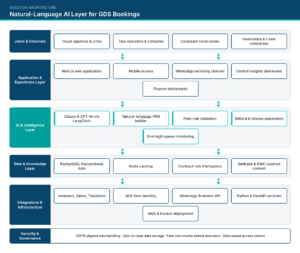
Solution Architecture

Solution Delivered

Blood-Cell Instance Segmentation

A deep-learning segmentation model was developed to separate and identify individual cells within raw microscope images.

Key capabilities included

  • Instance-level separation of individual blood cells
  • Detection of overlapping and closely positioned cells
  • Automated cell counting
  • Visual segmentation of detected cells
  • Processing of JPEG images directly from the microscope
  • Structured output for further classification and review

Malaria Parasite Detection

A classification layer was implemented to identify cells showing visual characteristics associated with malaria infection.

The solution provided

  • Identification of potentially infected cells
  • Detection of Plasmodium-related visual patterns
  • Classification following cell segmentation
  • Confidence scoring of model predictions
  • Visual flagging of suspected infected cells
  • Technician review of AI-generated findings

Image Pipeline and Model Robustness

A data-processing pipeline was developed to handle real-world variations in microscopy images.

Capabilities included

  • Ingestion of raw microscope output
  • Image-quality and preprocessing controls
  • Handling of differences in slide staining
  • Model tuning across variations in focus and image quality
  • Standardisation of image inputs
  • Consistent processing across differently prepared slides
  • Structured storage of analysis results

Device Integration and Technician Review

The AI models were integrated into the client’s diagnostic-device workflow.

The integrated solution included

  • AI inference within the IoT product
  • Edge deployment on the device or laboratory hardware
  • Local processing without mandatory cloud transfer
  • Display of cell counts and suspected infections
  • Visual presentation of analysed images
  • Technician confirmation of flagged findings
  • Controlled review before results were reported

Technology Stack

The technology environment included

  • Deep-learning models for microscopy-image segmentation
  • Instance-segmentation models for individual cell detection
  • Image-classification models for malaria-parasite detection
  • Computer vision pipelines for raw JPEG slide images
  • Image preprocessing and quality-normalisation components
  • Edge AI deployment for local inference
  • IoT integration with the diagnostic-device workflow
  • Technician review and result-confirmation interface
  • Local or on-premises processing infrastructure

Engagement Model

The project was delivered through SilwaTech’s partner ecosystem under a partner-led implementation model.

The AI research, model development, data-pipeline engineering, device integration, testing and technical implementation were performed by an experienced SilwaTech partner company. SilwaTech contributed through engagement alignment, partner collaboration and coordination of the required medical-imaging, edge AI and IoT capabilities.

The cross-functional delivery team included specialists in

  • Computer vision research
  • Medical image analysis
  • Deep-learning model development
  • Data engineering
  • Edge AI deployment
  • Embedded and IoT integration
  • Product engineering
  • Quality assurance and model testing

Delivery progressed through four stages

  1. Analysis of the laboratory workflow, image conditions, and performance objectives
  2. Training of the cell-segmentation model using real microscope images
  3. Development and tuning of the malaria-detection model across staining and focus variations
  4. Integration with the IoT product and pre-launch evaluation within the technician workflow

The identities of the end client and implementation partner remain confidential. SilwaTech does not represent itself as the direct contracting party or sole technical implementer for this engagement.

Security and Governance Focus

Microscopy images and diagnostic-support results required secure handling and controlled use.

Key areas of focus included

  • Encryption of slide images and results in transit and at rest
  • Role-based access to images and analysis results
  • Controlled access to review and confirmation functions
  • On-device or on-premises inference where required
  • Reduced need for diagnostic images to leave the laboratory
  • Logging of AI-generated findings and technician reviews
  • Technician confirmation before diagnostic reporting
  • Traceability of model-generated counts and flags
  • Data-handling practices designed to support applicable medical-data requirements

The solution was designed to assist qualified laboratory personnel and not replace their clinical judgement or established diagnostic procedures.

Value Delivered

Pre-launch product evaluation indicated

  • 35% improvement in diagnostic accuracy
  • 40% reduction in missed malaria cases
  • 55% reduction in laboratory workload
  • Automated analysis of JPEG images directly from the microscope
  • Automated segmentation and counting of individual cells
  • Identification of potentially infected cells
  • Faster presentation of findings to laboratory technicians
  • Local inference through device or laboratory hardware
  • Integration of AI results into the existing device workflow
  • Continued technician oversight of every reported result

These figures represent pre-launch product data and should not be presented as independently verified clinical-study outcomes unless supporting validation evidence is available.

Why Silwatech

This engagement demonstrates the type of medical-imaging AI capability SilwaTech can support through its technology partner ecosystem, including
Access to specialists in computer vision and deep learning
    Experience with medical-image segmentation and classification
      Capability in edge AI and IoT-device integration
        Local and on-premises inference options
          Human-in-the-loop controls for diagnostic-support workflows
            Strong emphasis on secure handling of sensitive medical data
              Structured collaboration with specialised medical AI implementation partners

                Selected Enterprise & Public Sector Experience

                Our project experience spans government authorities, regulated enterprises, and major organisations across multiple industries.

                References shown may include direct SilwaTech engagements and work delivered through our contracted partner network. Inclusion does not imply a direct contractual relationship with, or endorsement of, SilwaTech.

                Let’s Start the Conversation

                Engage with our enterprise team to discuss your digital transformation goals, platform modernization initiatives, or large-scale system requirements. We’re ready to support your next strategic technology move.

                1 Step 1
                reCaptcha v3
                keyboard_arrow_leftPrevious
                Nextkeyboard_arrow_right
                FormCraft - WordPress form builder

                UAE (HQ)

                Al Shoala Bldg, E Block, 4th Floor, Deira City Center, Dubai, UAE

                INDIA

                401, One World West, Nr. Ambli T-Junction 200,S P Ring Road, Bopal, Ahmedabad, Gujarat 380058, India

                France

                74 boulevard du, 11 novembre 1918 69100 villeurbanne

                South Africa

                Sales and Delivery Support

                United Kingdom

                Sales and Delivery Support

                SilwaTech is a custom software and digital engineering company supporting enterprises and government organisations across GCC and EMEA. Our leadership and delivery teams bring over two decades of combined experience, with technical capabilities available directly and through our contracted partner network. We deliver solutions shaped around each client’s requirements, security needs and operating environment.

                Structured Delivery Practices | Client-Specific Security Controls | Ongoing Technical Support
                © 2026 SilwaTech. All Rights Reserved.