


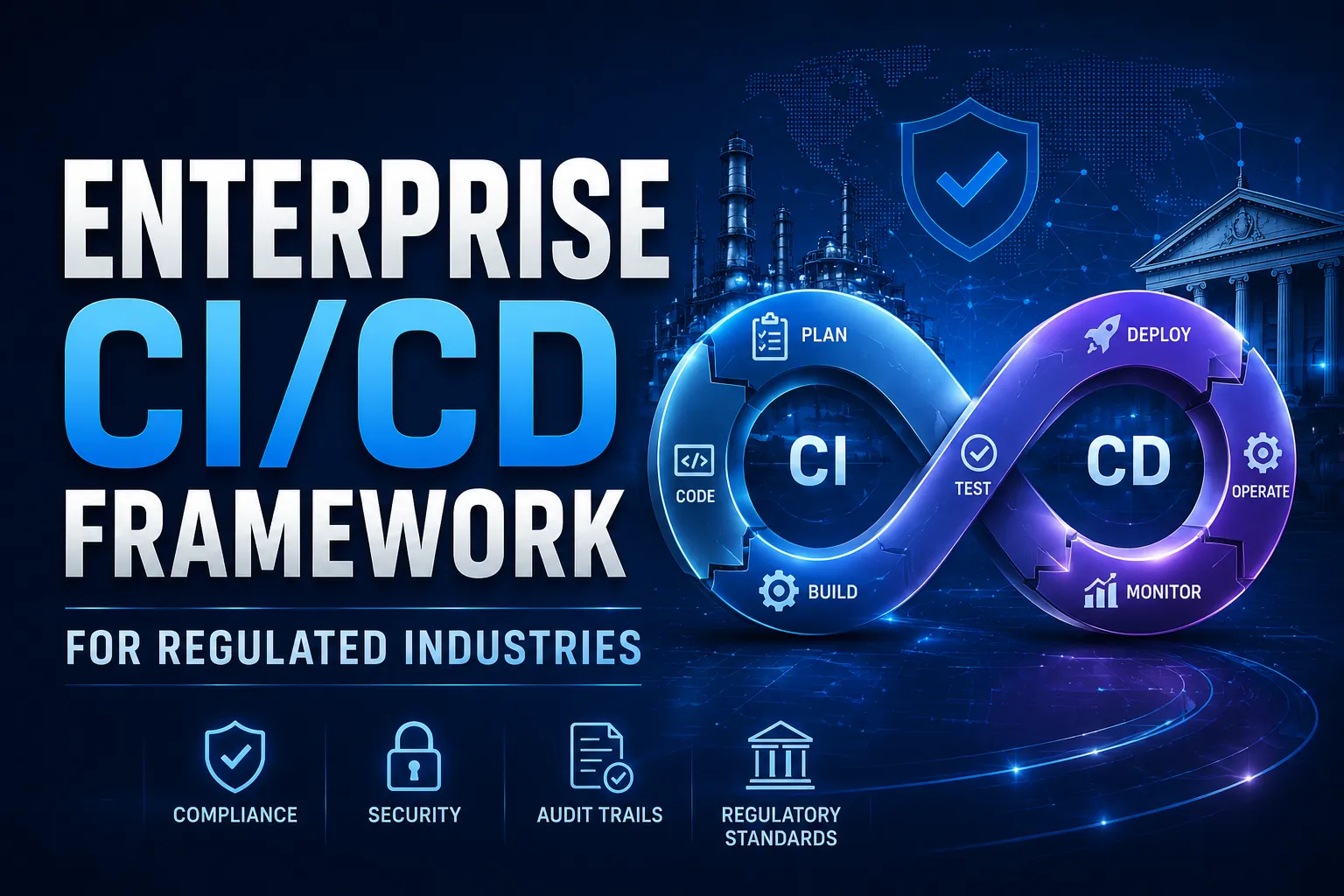
Organizations in regulated industries such as healthcare, banking, insurance, pharmaceuticals, and government must balance rapid software delivery with strict compliance requirements. An Enterprise CI/CD Framework helps automate software development, testing, security, and deployments while ensuring regulatory compliance, reducing risks, and improving overall software quality.
By integrating DevSecOps practices and automated compliance checks into every stage of the development lifecycle, organizations can release software faster without compromising security or governance.
What is an Enterprise CI/CD Framework?
An Enterprise CI/CD Framework is a secure and standardized software delivery pipeline that automates code integration, testing, security validation, compliance checks, and deployments. Unlike traditional CI/CD pipelines, enterprise frameworks include governance controls, audit logging, and approval workflows required for regulated industries.
Why Regulated Industries Need Enterprise CI/CD
Organizations handling sensitive financial, healthcare, or customer data must comply with regulations such as HIPAA, GDPR, PCI DSS, ISO 27001, and SOC 2. Manual software delivery processes can lead to delays, compliance gaps, and security vulnerabilities.
A well-designed CI/CD framework automates compliance validation, security testing, and documentation, making software releases faster and more reliable.
Key Components of an Enterprise CI/CD Framework
Continuous Integration
Automatically builds, tests, and validates code whenever changes are committed.
DevSecOps Integration
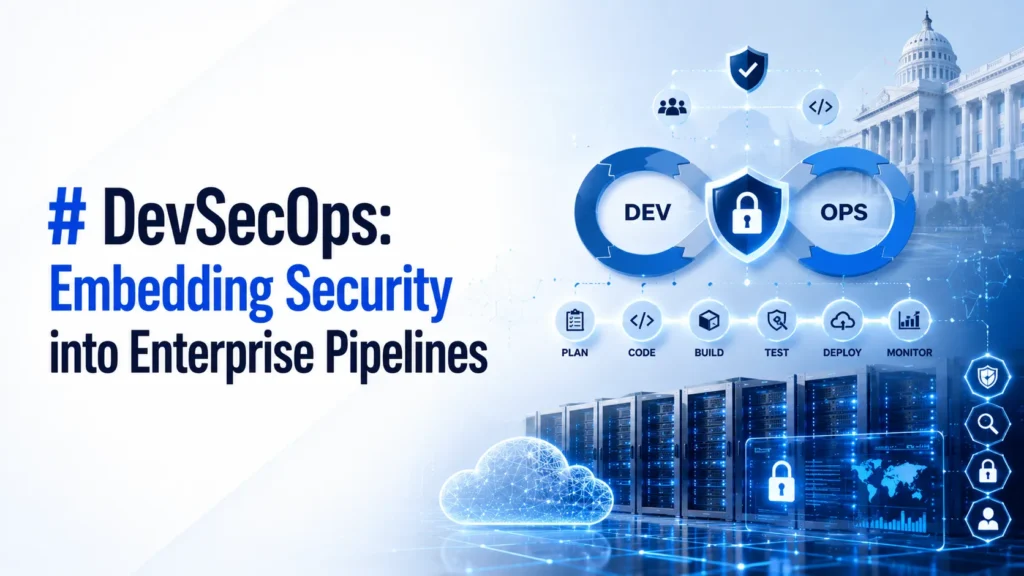
Integrates security testing such as SAST, DAST, dependency scanning, and vulnerability detection into every pipeline stage.
Compliance Automation
Automates policy enforcement, audit logging, encryption validation, and compliance reporting.
Infrastructure as Code (IaC)
Manages infrastructure through code, ensuring consistent deployments and reducing configuration drift.
Continuous Monitoring
Continuously monitors application health, security events, and compliance status after deployment.
Benefits of Enterprise CI/CD
- Faster and more reliable software releases
- Improved security through automated testing
- Reduced compliance effort and audit preparation
- Better traceability with complete audit logs
- Consistent deployments across environments
- Higher software quality and reduced operational risk
Best Practices
- Adopt DevSecOps from the beginning of development.
- Automate testing, security scanning, and compliance checks.
- Use Infrastructure as Code for consistent environments.
- Implement role-based access control and approval workflows.
- Continuously monitor applications and infrastructure for compliance.
Conclusion
An Enterprise CI/CD Framework enables regulated organizations to deliver secure, compliant, and high-quality software at speed. By combining automation, DevSecOps, Infrastructure as Code, and continuous monitoring, businesses can meet regulatory requirements while accelerating innovation and reducing operational risks.
FAQs
It is a standardized software delivery pipeline that automates development, testing, security, compliance, and deployment processes while maintaining governance and auditability.
Healthcare, banking, insurance, pharmaceuticals, government, and other industries that must comply with strict regulations benefit the most.
DevSecOps integrates security testing and vulnerability scanning into every stage of the CI/CD pipeline, reducing risks before deployment.
Compliance automation reduces manual effort, improves audit readiness, and ensures regulatory policies are consistently enforced.
Key benefits include faster deployments, improved security, reduced compliance costs, better software quality, and complete deployment traceability.